APPLICATIONS MANAGEMENT UX/UI CASE STUDY
Next Role
ROLE
Product Designer
TIMELINE
2 weeks
YEAR
2026
Project description
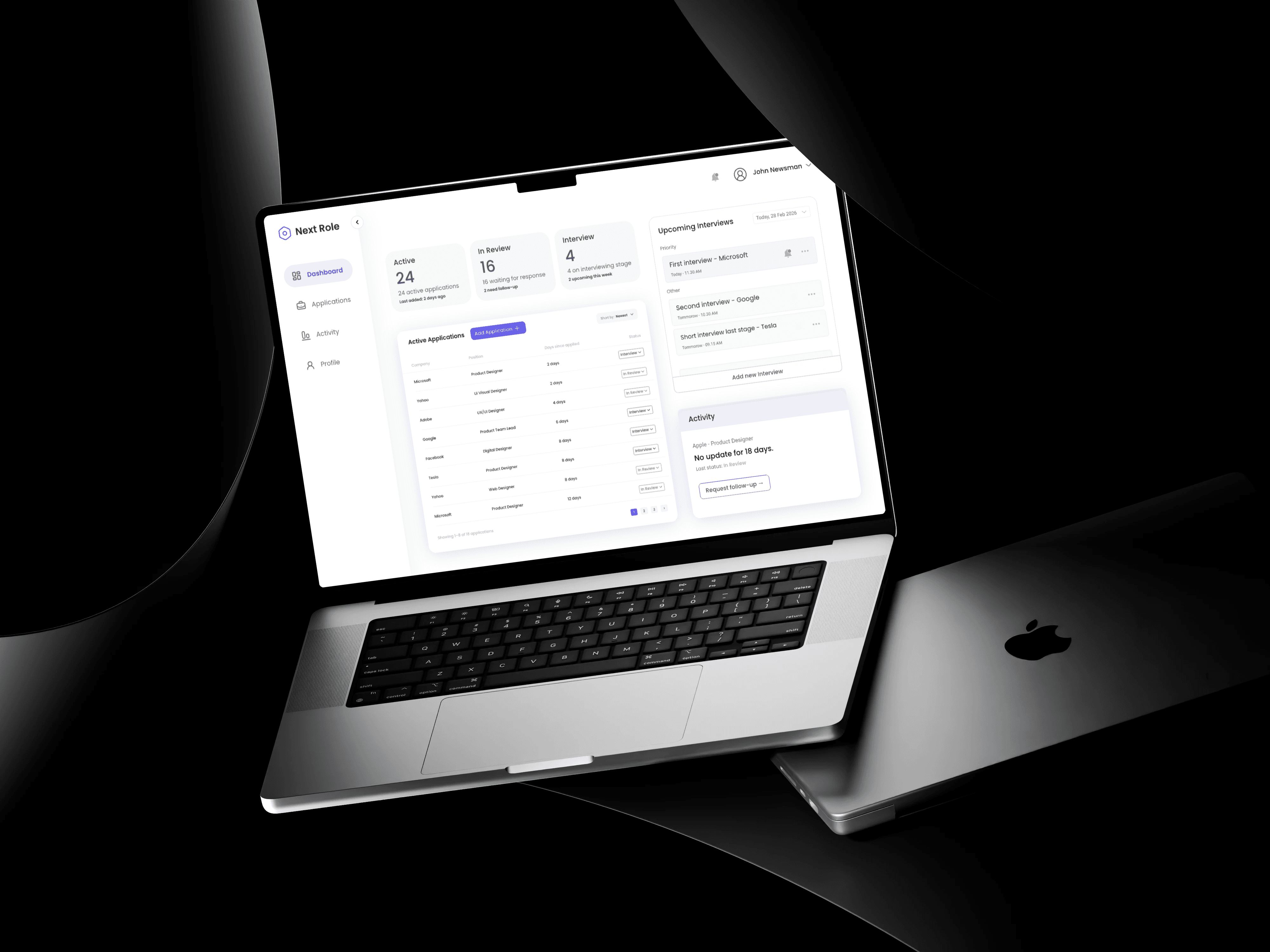
NextRole is a desktop application management tool designed to reduce frustration in the hiring process. It helps candidates track applications, understand where they stand, and manage their job search with clarity and control.
*This was a rapid concept challenge focused on solving a real, everyday problem.
The Challenge:
How might we reduce uncertainty in the job application process without relying on external platforms or recruiter updates?
The Problem
The hiring process lacks transparency.
-Candidates often don’t know where they stand.
-Feedback is rare.
-Applications are scattered across platforms.
-Silence creates stress and overthinking.
The frustration isn’t rejection.
It’s uncertainty.
The Solution
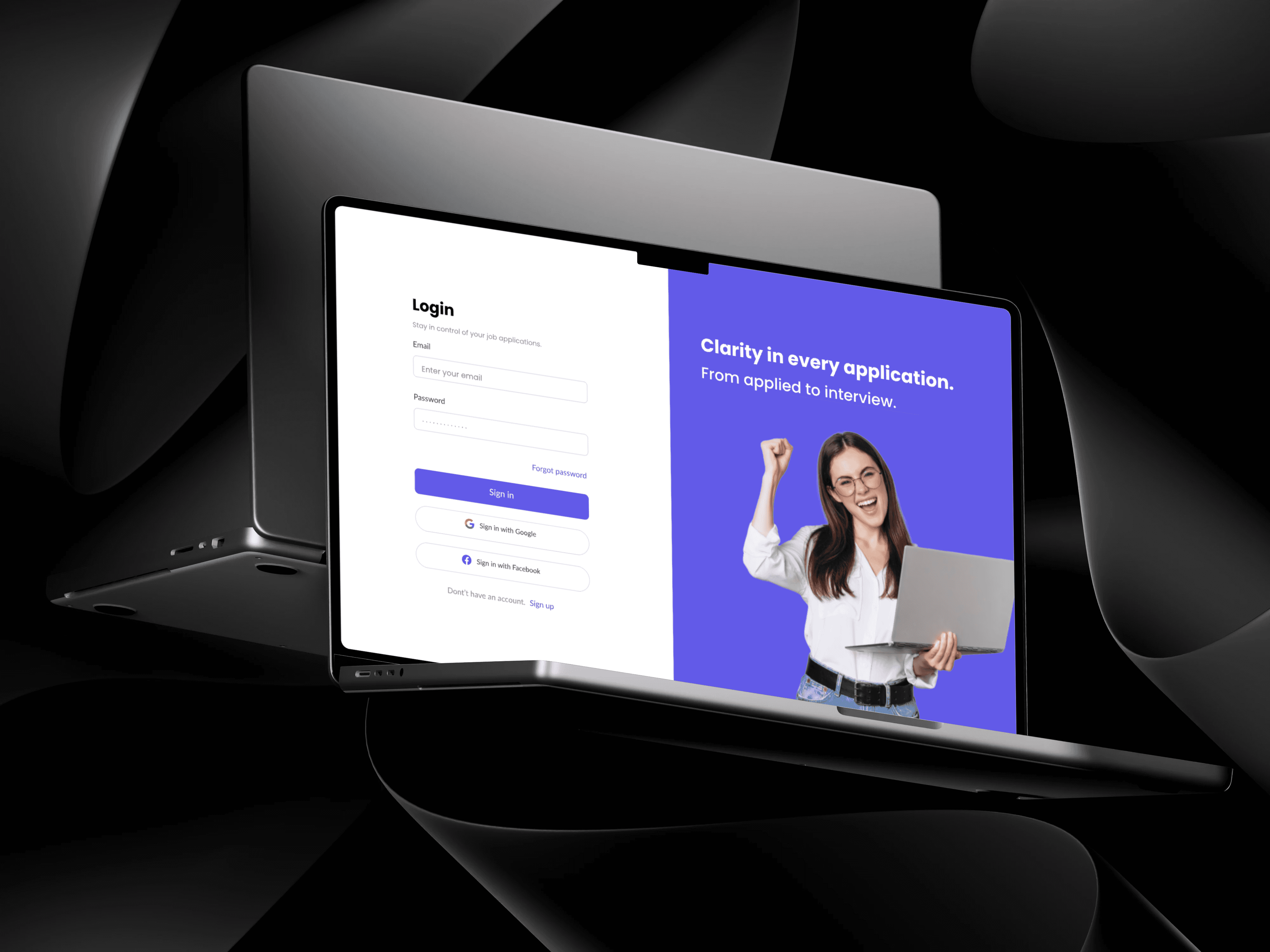
NextRole introduces a structured, user-controlled system for managing job applications. The product focuses on clarity rather than prediction.
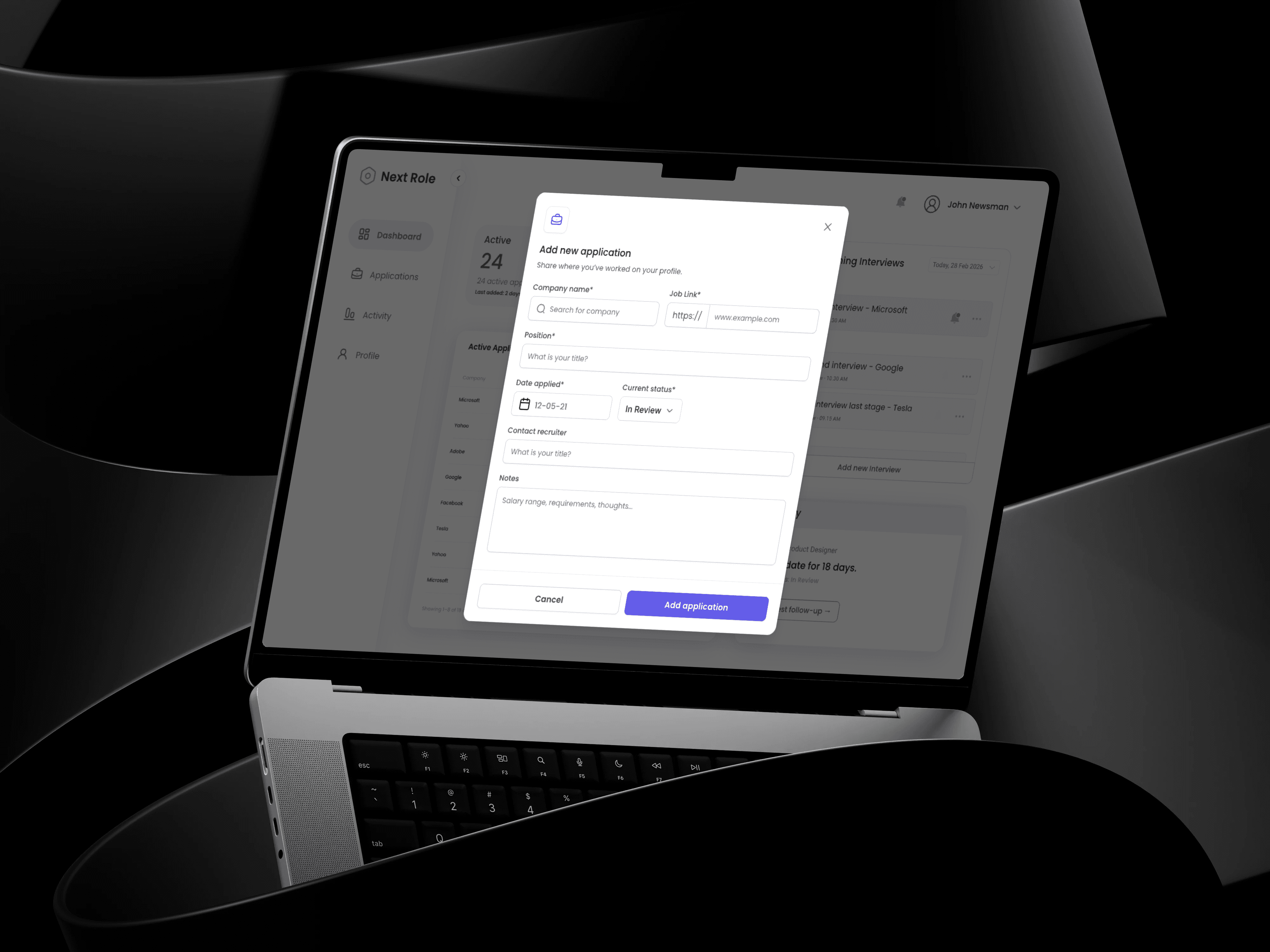
Structured Tracking
Applications are organized in clear stages.
Users manually control status updates for accuracy.
Time-Based Guidance
The system highlights inactivity.
Follow-up prompts appear when appropriate.
Clear Overview
Active and archived applications are separated.
Interview stages are visible at a glance.
The dashboard remains minimal to reduce cognitive load.
NextRole does not attempt to predict hiring outcomes.
It restores control through structure.
Key Product Decisions
-Removed automatic rejection logic to avoid false assumptions
-Made status fully user-controlled for transparency and accuracy
-Separated active and archived views to reduce mental overload
-Introduced time-based follow-up prompts instead of pressure notifications
-Designed the dashboard as an operational tool, not an analytics panel
Results
NextRole reframes the job search as a manageable process rather than an emotional guessing game.
Clear visibility of progress.
Reduced cognitive overload.
Structured job search behavior.
Increased sense of control.
What I learned
-Process design has emotional impact.
-When users understand where they stand, uncertainty decreases.
-Clarity can reduce frustration more effectively than adding complex features.