HABIT BUILDING APP I UX/UI CASE STUDY
Build&Brake
ROLE
UX/UI designer
TIMELINE
1 month
YEAR
2026
Project description
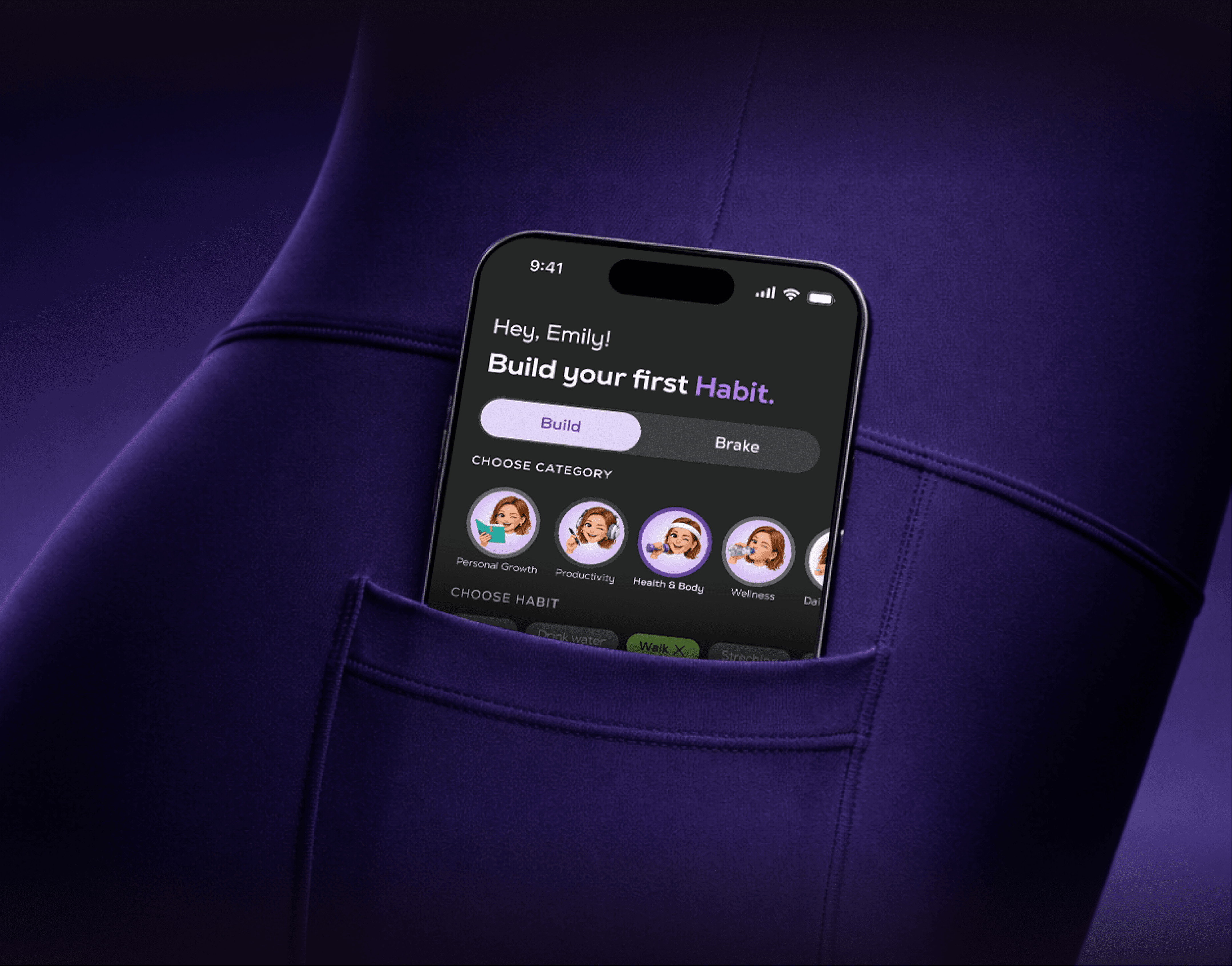
Build & Break is a habit-building app that helps users build positive routines and break unhelpful habits through clear structure, motivation, and accountability.
The Challenge:
How might we help users stay consistent with habits without relying on streak pressure or unrealistic goals?
The Problem
Most habit-tracking apps rely on motivation and streak systems.
When motivation fades, consistency quickly drops.
Behavioral Gaps
Motivation is treated as a constant, but in reality it fluctuates.
When users miss a day, streak resets create guilt instead of encouragement.
Large, ambitious goals feel overwhelming and difficult to sustain.
After the first setback, many users disengage entirely.
Product Gaps
Many habit apps overload users with features and complex tracking systems.
Cluttered interfaces increase cognitive load instead of reducing friction.
Breaking bad habits is rarely supported in a structured way.
Personalization is limited, making it harder to adapt habits to real-life routines.
My Approach
I focused on reducing friction and designing a habit system that feels easy, flexible, and sustainable in real life.
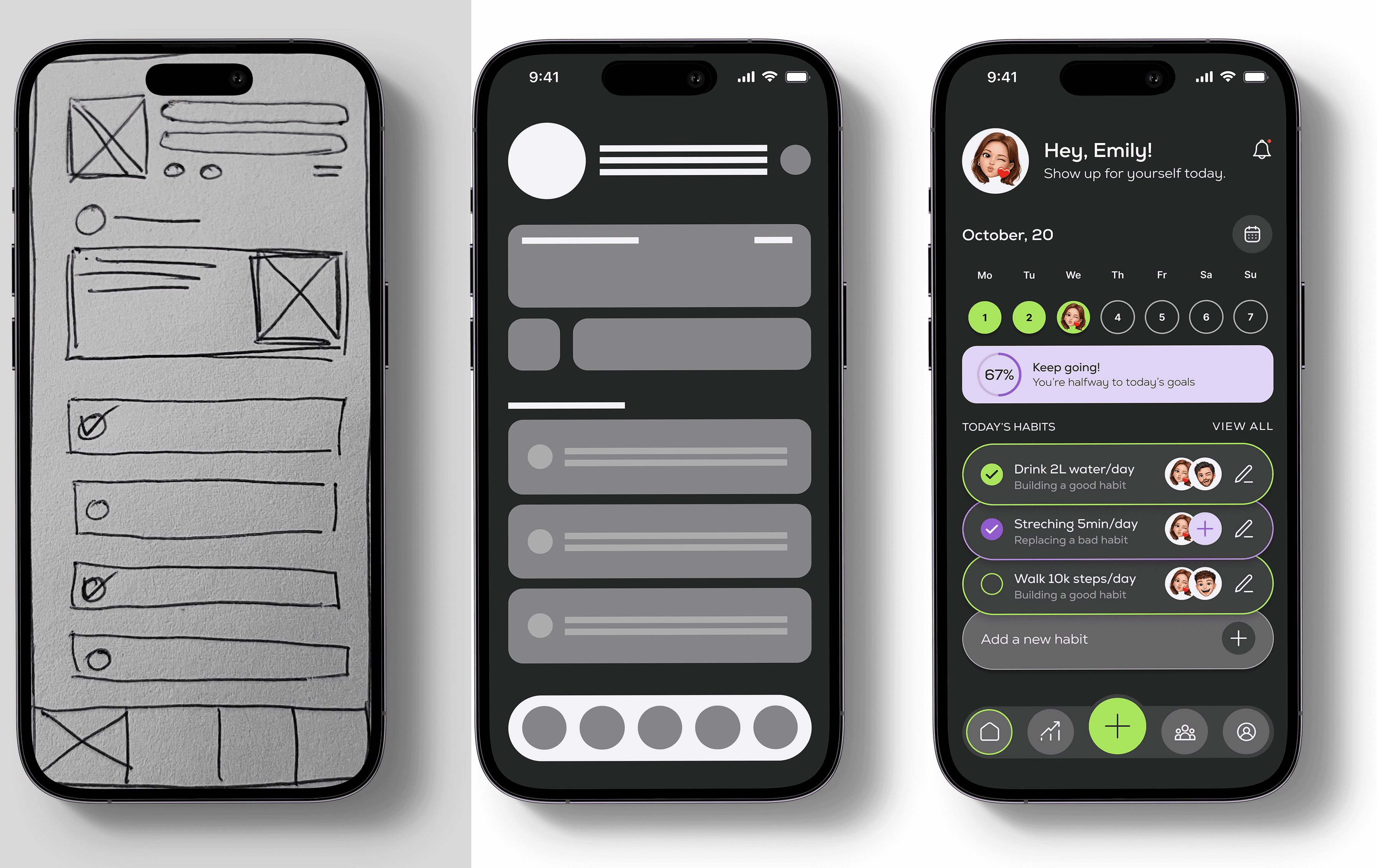
• Identified emotional drop-off moments through research
• Simplified habit setup and daily logging flows
• Removed pressure-driven mechanics like streak resets
• Designed for focus with a minimal, dark-first interface
• Validated clarity and usability through iterative testing
The Solution
Build & Break reduces friction by making habit formation feel simple and achievable.Instead of relying on motivation, the system supports small, consistent actions.
Sustainable Progress
Habits are built through tiny daily steps rather than ambitious goals.
Missing a day does not reset progress or create guilt.
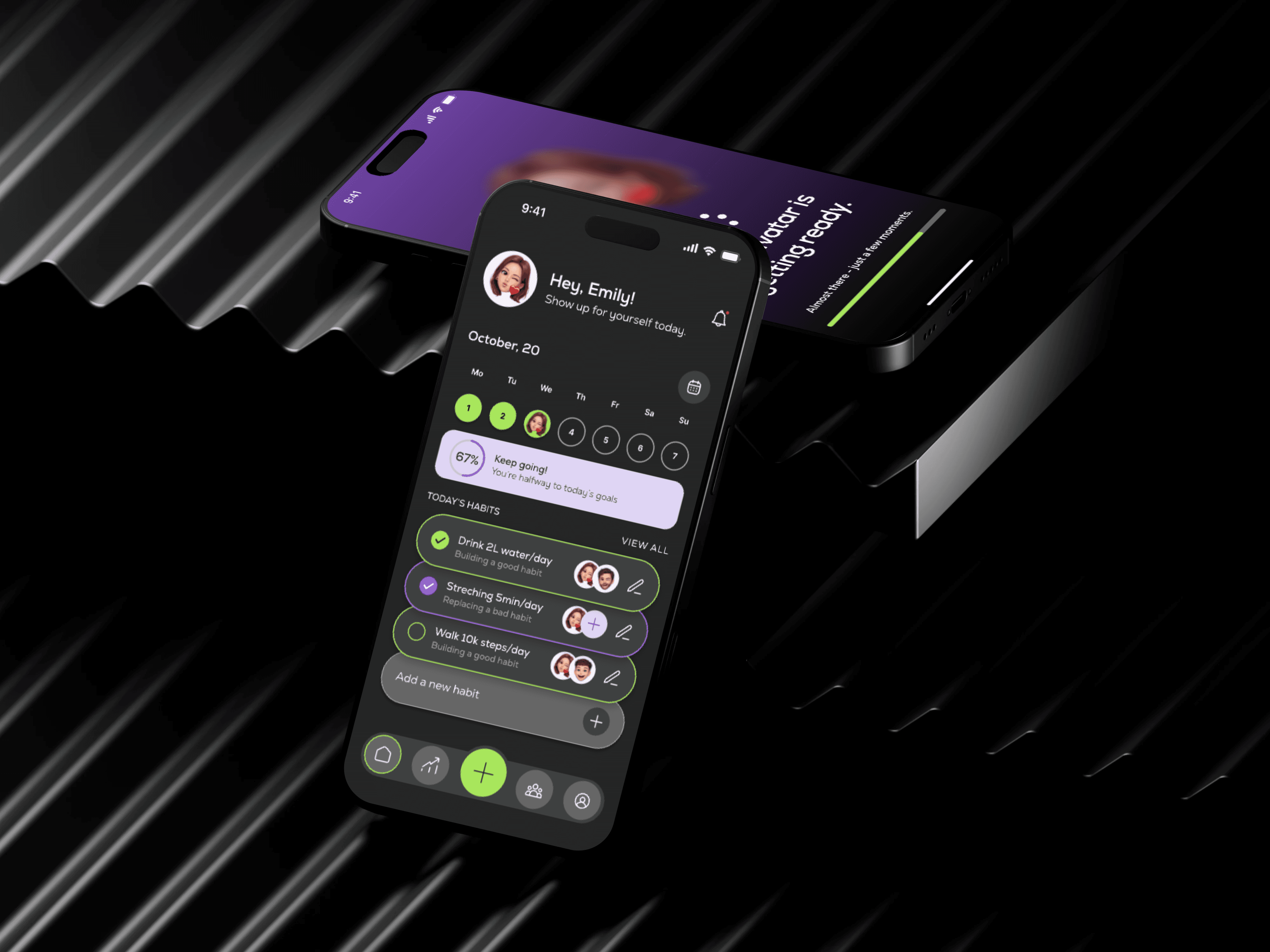
Growth is visualized to reinforce momentum without pressure.
Low Cognitive Load
The interface is minimal and distraction-free.
A dark-first approach improves focus and readability.
Habit setup takes seconds, reducing decision fatigue.
Support Without Comparison
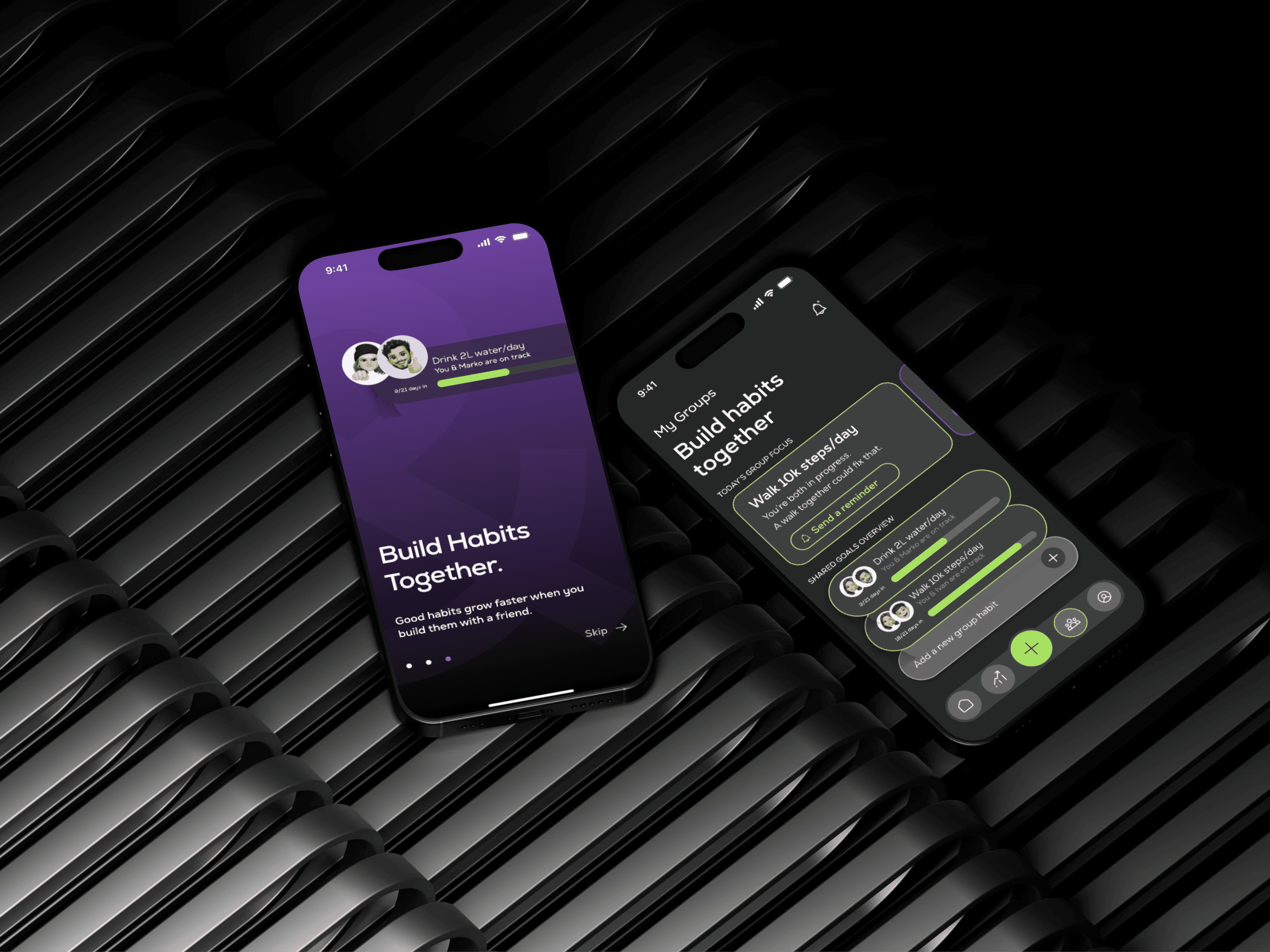
Users can build shared habits with a friend.
Encouragement replaces competition.
Accountability feels collaborative, not performative.
Adaptive Simplicity
The app suggests habit variations based on user preferences.
Flexible reminders adapt to real-life routines.
The system makes starting - and continuing - easier.
Key Product Decisions
-Replaced streak-based mechanics to reduce dropout after missed days
-Designed flows around micro-actions to increase perceived achievability
-Applied ADHD-friendly principles to lower cognitive load
-Chose dark-first UI to improve focus and reduce visual strain
- Introduced collaborative habit mode to leverage accountability without comparison

Results
User validation confirmed strong emotional alignment with the low-pressure approach.
Behavioral validation
• 71% quit habit apps after missing one or two days
• 64% feel pressured by streak systems
• 78% prefer small daily actions
Usability impact
• Faster habit setup
• Reduced cognitive load
• Clearer progress visualization
Users described the experience as:
“Calmer”, “More realistic”, “Less stressful than other apps”
What I learned?
-Designing behavioral products means designing for fluctuation, not perfection.
-Reducing friction often has more impact than adding motivational features.
-Small structural decisions can significantly influence long-term engagement.
-Consistency grows when systems feel easy and forgiving.